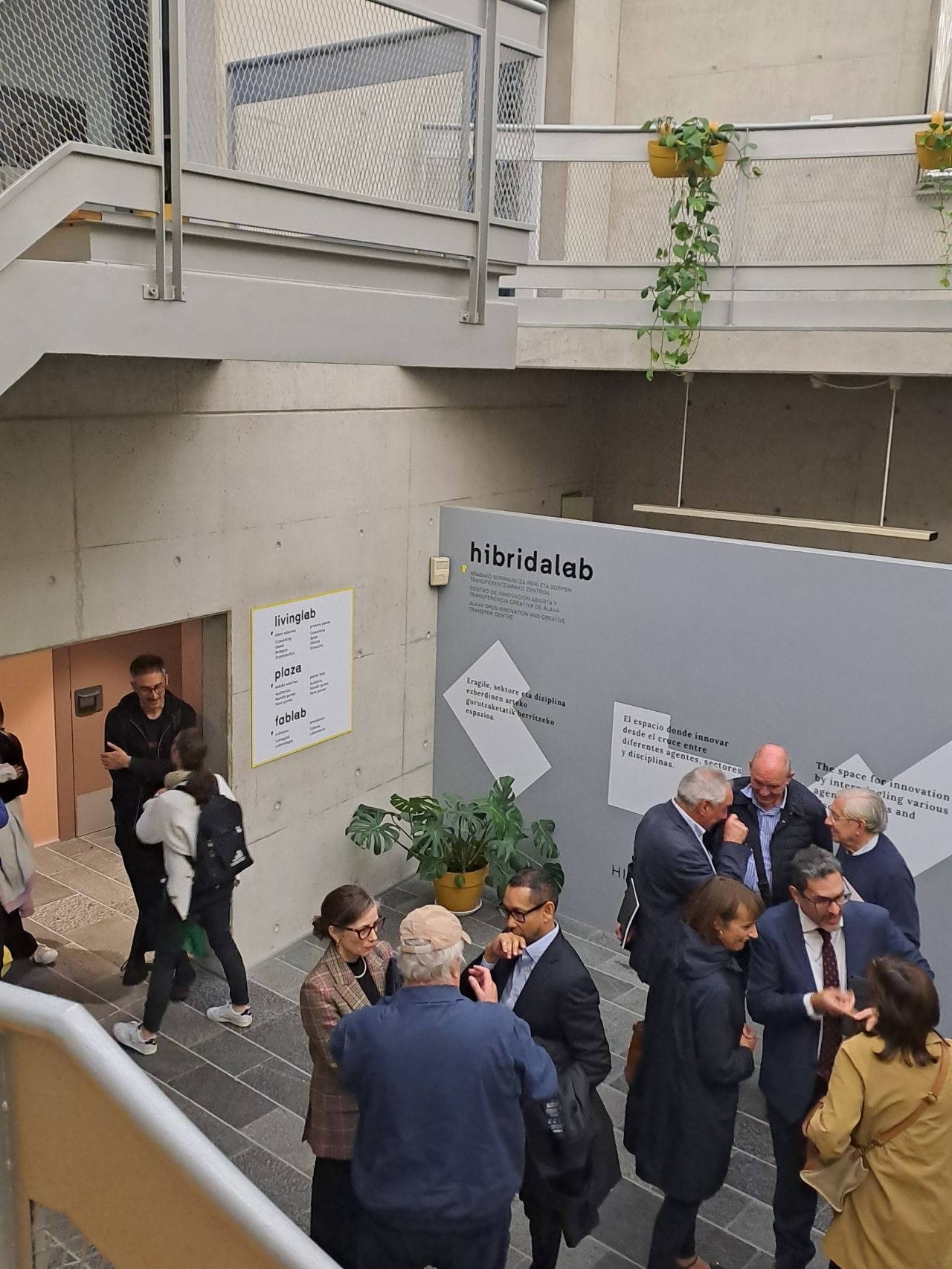

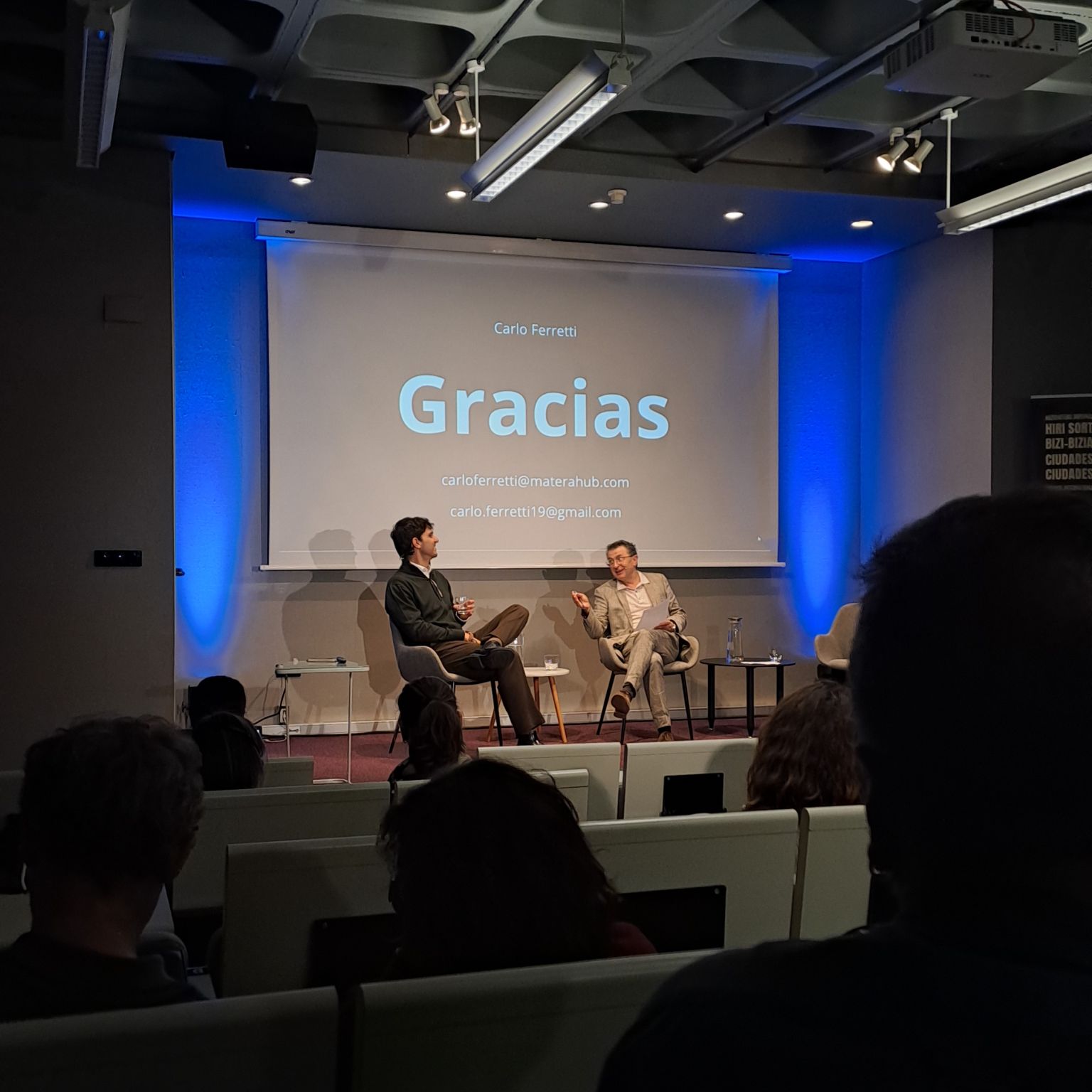
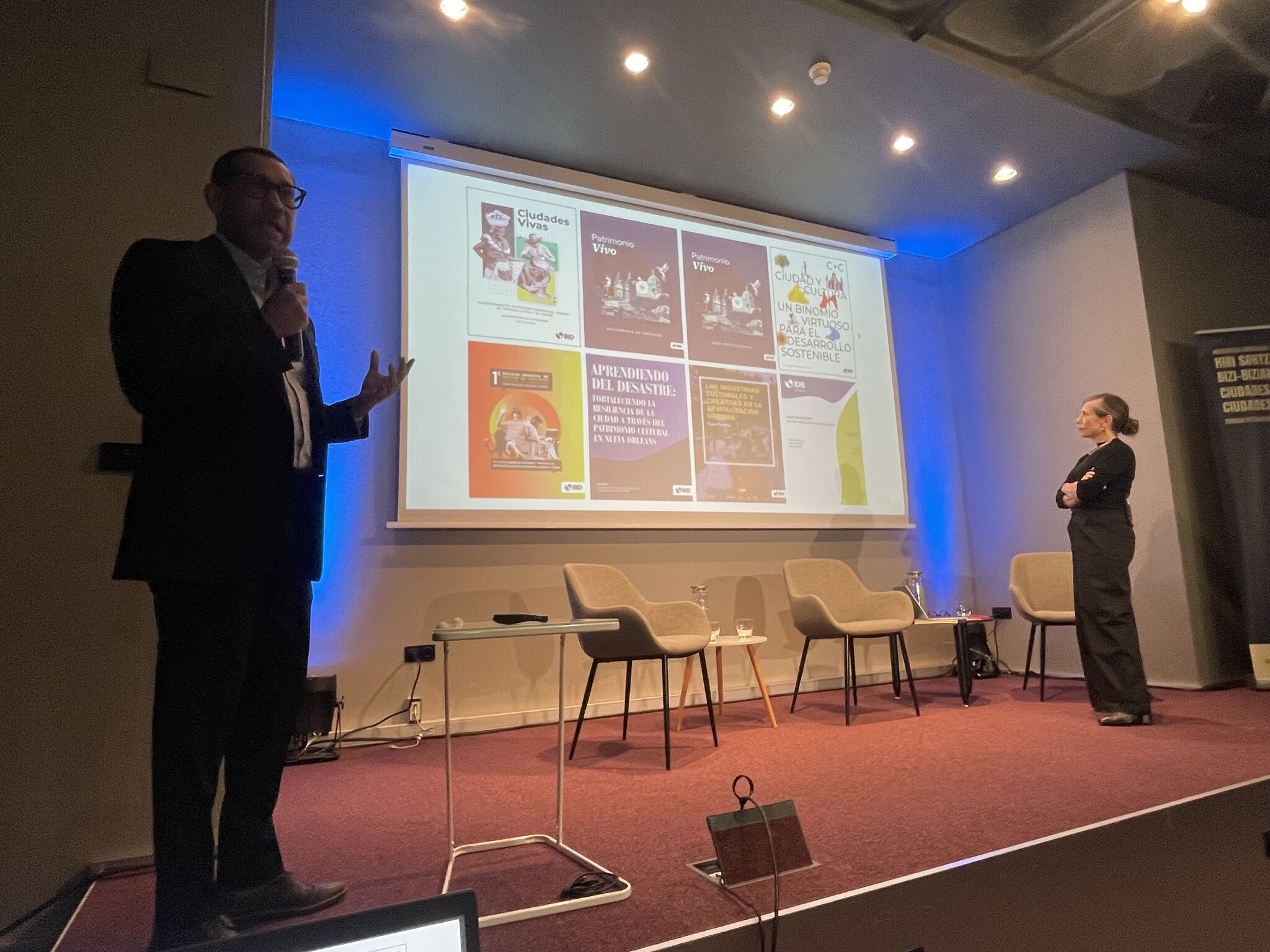
Participating as a panelist at Hibridalab – Vitoria 2025 offered me the opportunity to revisit a question that has long shaped my work with Materahub: how can culture become not only a dimension of urban life, but a true infrastructure of development? The event was part of the broader framework of the Ensanche Eco-Distrito Emprendedor, an ambitious strategy designed to reposition Vitoria-Gasteiz’s historic nineteenth-century district as a laboratory for sustainable and creative regeneration.
In my presentation, I turned to Matera’s experience as European Capital of Culture 2019. The story is by now familiar: a city once stigmatized as “the shame of Italy” was able to reconfigure its identity and global perception through a process of civic mobilization, cultural production, and institutional innovation. Yet what remains less often discussed are the structural lessons that such a trajectory leaves for other cities: the necessity of co-creation, the fragility of governance, and the long-term implications of culture-driven transformation.
Lessons from the Matera 2019 Legacy
Matera 2019 demonstrated the extraordinary capacity of culture to activate social energy, attract international visibility, and generate economic spillovers. Over 57,000 citizens took part in participatory processes, while the city saw exponential growth in tourism and the revitalization of numerous unused spaces. However, the aftermath also revealed the limits of event-based strategies. Without a consolidated governance model, the legacy risks dilution, and cultural infrastructures may remain underutilized.
For Materahub, this moment marked an evolution of our role. As the structures created for Matera 2019 gradually faded, we naturally positioned ourselves as a knowledge broker, connecting the local creative ecosystem with European programmes, research frameworks, and international networks. This shift illustrates a crucial point for cities like Vitoria: legacy is not a static asset but a process of translation, requiring intermediaries able to sustain networks, mobilize resources, and embed practices into broader policy frameworks.
The Vitoria Parallel: A Shared Vision
The parallels with Vitoria’s Ensanche are striking. The district’s revitalization strategy acknowledges many of the same dynamics that Matera experienced: a fragmented creative ecosystem, the presence of underused spaces, and the urgent need to articulate public, private, and community actors into new governance models. The Plan de Impulso explicitly identifies cultural and creative industries not as “complements” but as structuring elements of urban change. This recognition reflects a wider European shift: culture is no longer conceived as ornamentation but as a driver of cohesion, sustainability, and competitiveness.
Reconceptualizing Culture as Infrastructure
What emerges, then, is the necessity to reconceptualize culture as infrastructure. Much like transport or digital connectivity, cultural ecosystems provide enabling conditions for participation, innovation, and resilience. But unlike other forms of infrastructure, culture is both material and immaterial: it involves spaces, regulations, and investments, but also narratives, relationships, and collective meaning-making. If left unanchored, it risks volatility; if strategically governed, it becomes a foundation for long-term transformation.
The discussion in Vitoria reaffirmed that small and medium-sized cities, particularly in the Mediterranean and European peripheries, hold unique potential in this regard. Their compact scale, social cohesion, and cultural heritage position them as laboratories where culture-led regeneration can be tested and adapted. The challenge is to move beyond episodic projects and towards systemic integration: embedding culture into urban agendas, aligning it with sustainable development goals, and recognizing it as a central dimension of democratic life.