
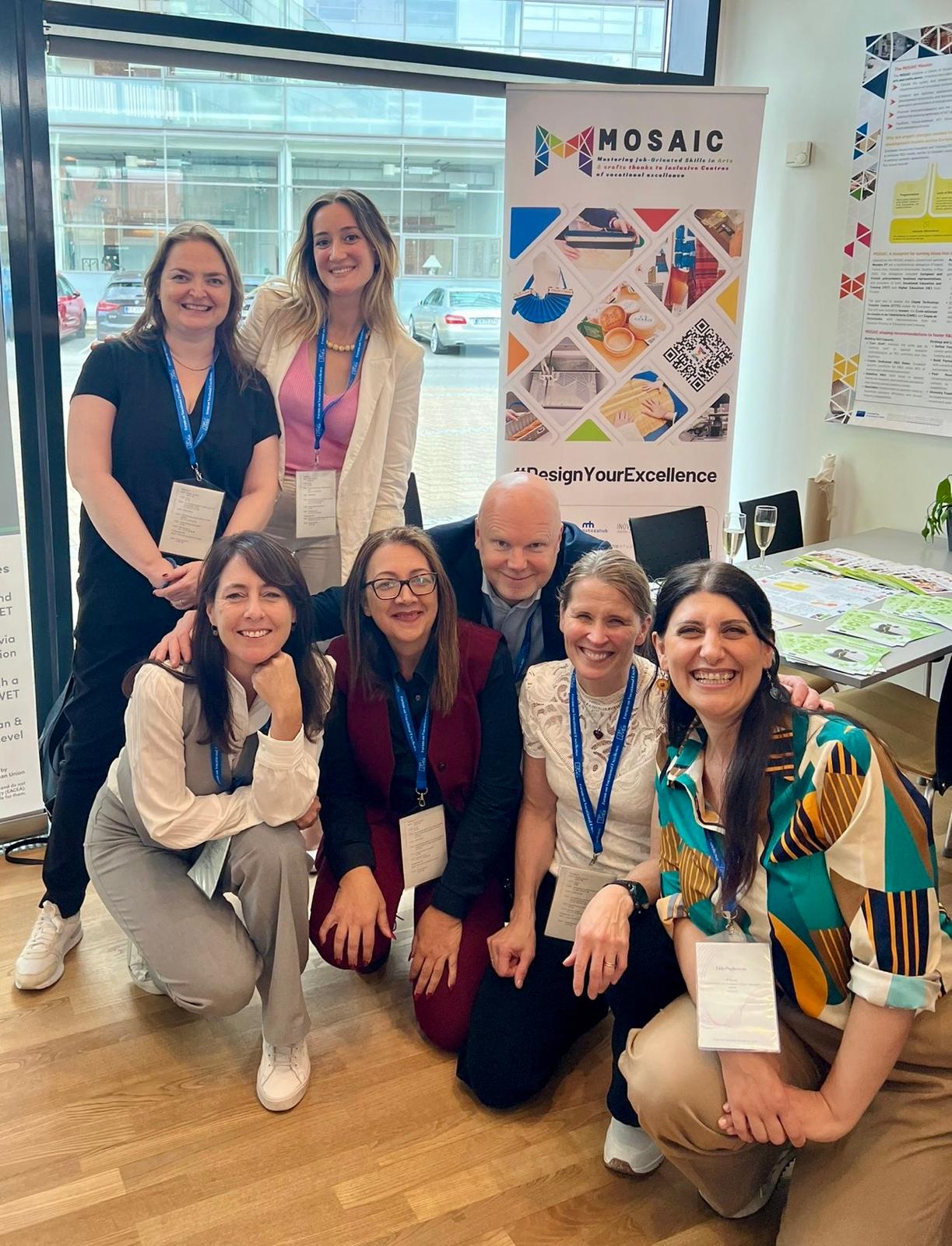
From 8 to 10 September 2025, Kolding (Denmark) hosted the Fourth Forum on Vocational Excellence (CoVE) under the theme “CoVE: Driven by Learners, Defined by Excellence.” The event brought together policymakers, educators, learners, and CoVE partners from across Europe and beyond, creating an inspiring space for dialogue, collaboration, and new partnerships. One of the forum’s main objectives was to encourage matchmaking opportunities among Centres of Vocational Excellence at both national and international levels.
Skills, Competitiveness, and the Future of VET
At a time when Europe is navigating major challenges linked to competitiveness and labour shortages, the forum reaffirmed the central role of vocational education and training (VET). Manuela Geleng, Director for Jobs and Skills at the European Commission’s DG Employment, Social Affairs and Inclusion, stressed that Europe’s competitiveness hinges on skills and that the labour shortage is most acute in the VET sector. Addressing this shortage, she argued, is essential for Europe’s ability to remain competitive on the global stage. The debate also touched on gender equality in VET. While progress is visible in regions outside Europe, as Pilvi Torsti (European Training Foundation) and Paolo Nardi (EfVET) pointed out, gender imbalances persist within Europe, showing the need for urgent, structural change to make vocational pathways more inclusive. Another recurring theme was the growing demand for soft skills, such as adaptability, creativity, teamwork that complement technical expertise.
For Materahub, this recognition is especially meaningful: we have long championed the idea that soft skills are not “optional,” but rather central to employability and innovation. Finally, participants reflected on the attractiveness of VET pathways. Jürgen Siebel, Executive Director of CEDEFOP, noted that vocational training still suffers from a perception problem, often beginning with parents who undervalue it compared to academic routes. Changing this mindset requires awareness-raising, mentoring, and visible success stories for young people considering their next steps, but also for adults embracing lifelong learning.
MOSAIC and Materahub at the Forum
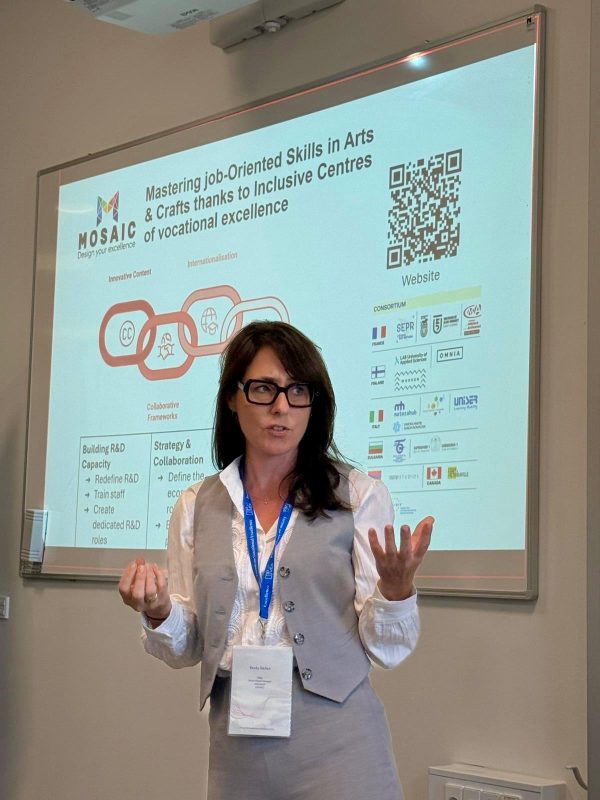
Materahub has been part of the Centres of Vocational Excellence (CoVE) journey since the very first Forum in San Sebastián (2022), through its active role in the MOSAIC project, a European initiative supporting inclusive skills development in the craft sector. As MOSAIC moves towards its conclusion, with Materahub leading the project’s sustainability strategy, the 2025 Forum in Kolding carried a special significance. During the session “Blueprints for Brilliance: What CoVEs Need to Be Brilliant,” Becky Riches presented MOSAIC’s success stories, enriched by insights from Canadian partner CEGEP de Victoriaville. A recent study visit to Canada offered Materahub and MOSAIC partners firsthand experience of a highly effective model that integrates vocational education with industry needs. In Quebec, applied research and technical centers have been bridging the gap between training and the private sector for more than 40 years, an approach so impactful that it is now being scaled nationwide.
This exchange sparked new initiatives within MOSAIC’s partner network. Inspired by the Canadian example, Ola Kukkasniemi, founder of Finnish woodmaking company WOODEN OY, launched a self-funded follow-up mission. He brought together a delegation of 15 stakeholders, including policymakers, VET and higher education representatives, officials from the Finnish Ministry of Economic Affairs, and experts from the European Training Foundation, for a return visit to Canada, deepening the exploration of this model and its potential for Europe.
A Vision for the Future of VET
We asked Ola Kukkasniemi what motivated him to launch this initiative. He shared:
“Based on my long career as an entrepreneur, my motivation to promote the establishment of the CCTT system in Finland lies in improving the growth and productivity of small enterprises, enhancing the expertise of teachers, and engaging students in working life and companies through RDI (Research, Development, and Innovation) activities. We lack a practical RDI system targeted at small businesses. In vocational education, there is no established system for updating teachers’ professional skills, and I hope for the best possible future for the students of tomorrow. The CCTT model brings all of these elements together. The long-term goal is to set European small businesses on a growth path that would enable a renaissance of European industry.”
Ola’s words underline a crucial point: vocational training is not only an educational challenge: it is a matter of national and European competitiveness. The impact of this engagement has already been felt. Under the leadership of the Finnish Ministry of Economic Affairs (notably, and not the Ministry of Education), VET and HEI representatives are now developing model proposals. A piloting phase is on the horizon, aiming to test and integrate this industry-focused approach into the Finnish educational landscape.
At Materahub, we are inspired to see vocational training being shaped by real market needs. This alignment is essential to keep education relevant and to ensure learners acquire the skills that industries demand. Building on Finland’s proactive steps, one of our priorities in the coming months will be to support this journey and explore how such success stories can inform stronger, more responsive vocational education policies across Europe.
👉 Discover the full programme and highlights of the CoVE Forum 2025 here: CoVE Forum 2025